
Have you ever missed someone you never met? Or wanted to thank someone who lived long before you were born?
Every year during Pitṛ Pakṣa, families across India and around the world stop to remember the generations who came before them. For children this can be confusing. How do you honour a great-great-grandmother you only know from a faded photograph?
One simple story, and a row of clay lamps, can help answer that.
A Different Kind of Evening
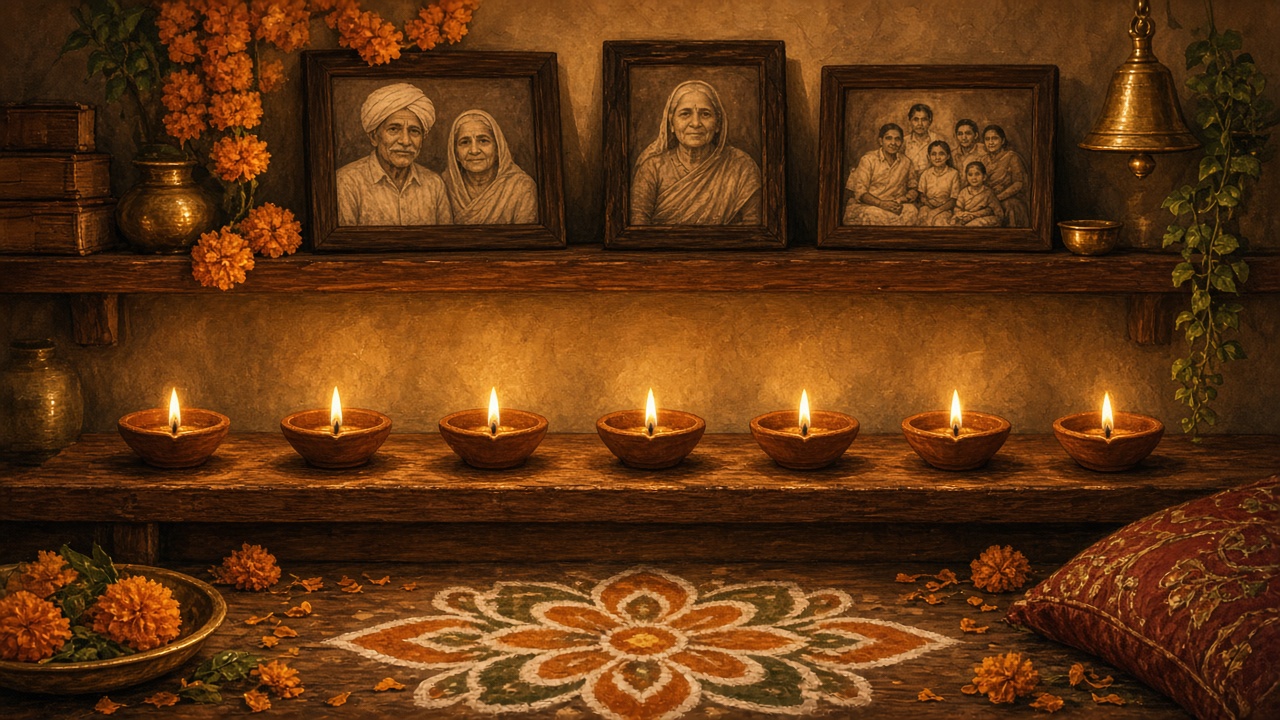
At sunset, a young boy named Aarav walked into his family's prayer room. Usually a single lamp burned there in front of Lord Krishna. Tonight there was a whole row of small clay lamps, each one lit.
Above them, on a wooden shelf, sat old photographs: great-grandparents and relatives whose voices Aarav had never heard. Pitṛ Pakṣa, the fortnight of remembering ancestors, had begun.
Aarav had a question many children share: how can you remember someone you never knew?
The Lesson of the Lamps
Picture one lit lamp next to an unlit one. Touch the new wick to the flame and the light passes across. The second lamp lights a third, the third lights a fourth, and soon the whole row is glowing.
The last lamp never touched the first one, but it holds the same flame.
Families work the same way. Someone taught you your first words. Before that, someone looked after your parents when they were small. Before them, generations of people worked hard, kept traditions alive, and made quiet sacrifices so that children like you could grow up safe and loved.
Aarav learned that his great-grandmother lived simply, cooked for anyone who was hungry, and held on to the values she had been taught. He never held her hand, but hearing about her kindness made him feel he knew her. Her light was still in his home.
What Families Do During Pitṛ Pakṣa
During this time, families carry out sacred duties called pitṛ-kārya. With the guidance of elders and priests, they offer rites such as śrāddha and tarpaṇa.
Children sometimes think Pitṛ Pakṣa is a gloomy or frightening time. It isn't. It is a time of gratitude, remembrance, and dharma, when a family looks back along the road its ancestors walked and says thank you.
Where Did the First Flame Come From?
If every lamp gets its light from the one before it, what lit the very first lamp?
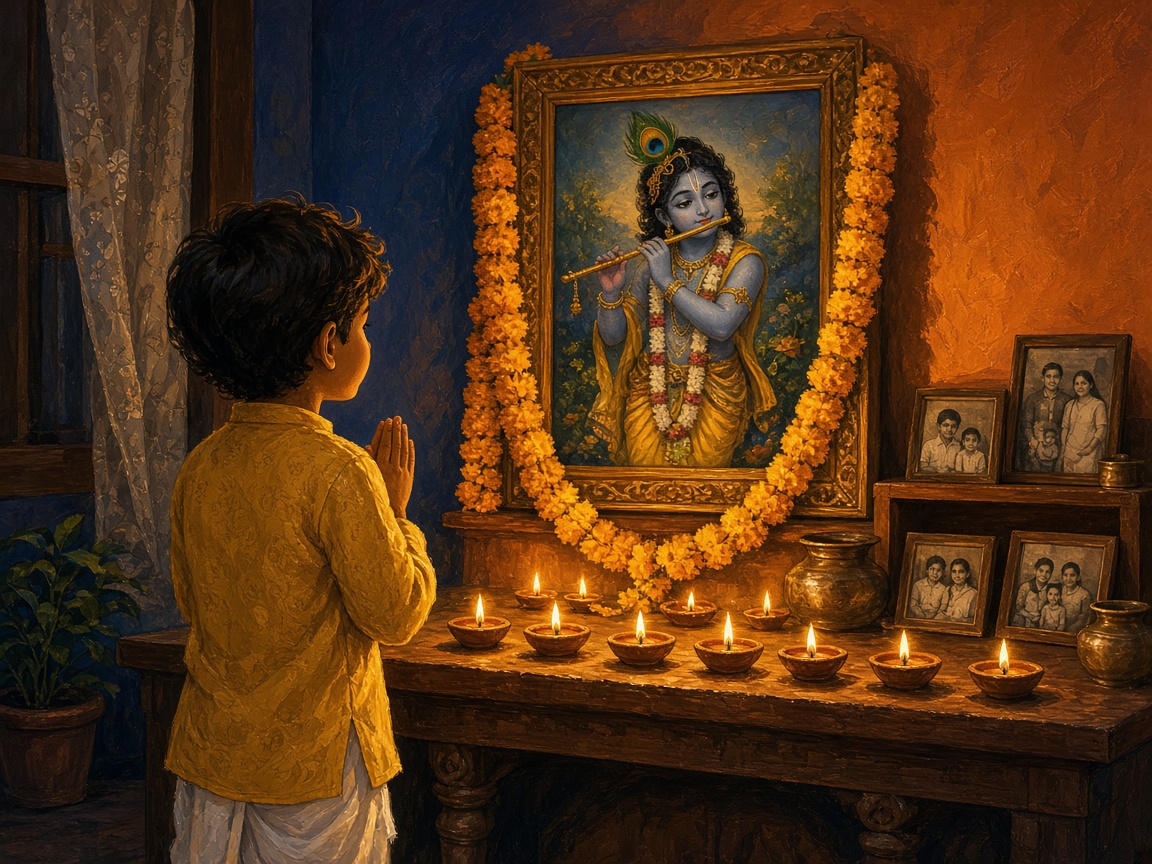
Aarav looked up at the picture of Śrī Kṛṣṇa in the centre of the altar.
Our tradition teaches us to honour parents, teachers, ancestors, and the devatās, as the śāstras instruct. Ancestors deserve deep respect, but they are not the Supreme. Above all stands Śrī Hari. Hari is Sarvottama, the highest, the source of everything, and our true refuge.
So when families perform Pitṛ Pakṣa rites, they keep Śrī Hari in their hearts, knowing every blessing comes from Him.
You Are the Newest Lamp
As it got dark outside, Aarav looked at the last lamp in the row, the youngest flame, and understood.
He was that lamp. So are you.
The knowledge, good habits, prayers, and love of past generations have been passed down until they reached you. One day it will be your turn to light the next lamp and hand on kindness, devotion, good character, and tradition to the generation after you.
A family isn't held together only by a surname or old photos. It is held together by gratitude, good values, dharma, and love for Śrī Hari.
Try This at Home
- Light a row of lamps together and talk about who lit the "first flame" in your family.
- Look through old family photos and share one story about each person.
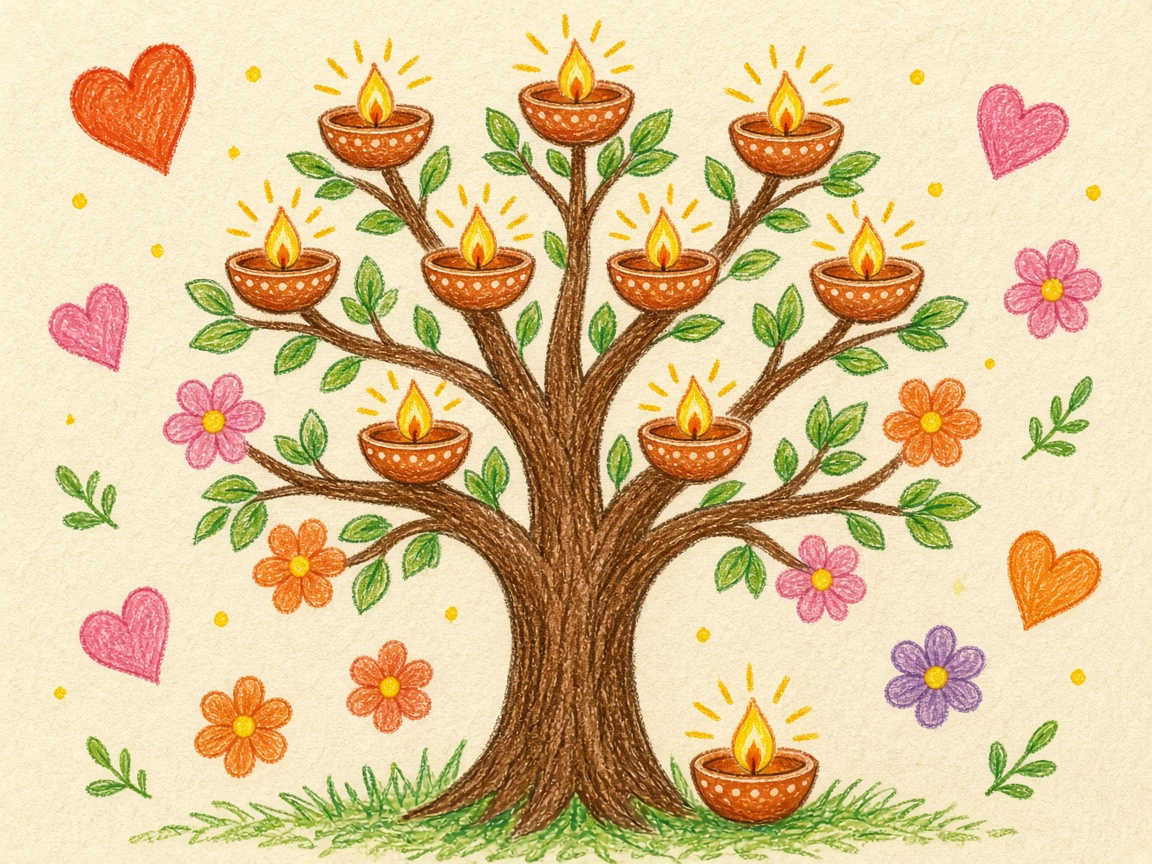
- Draw a family lamp tree where each lamp is a generation, with your child's lamp at the end.
- Say a thank-you prayer for ancestors, offered to Śrī Hari.
Next time you see a small lamp burning in the evening, think about how far its light has come to reach you, and how brightly you want to pass it on.